Europe Accelerates Defence Cooperation and Innovation as EDA Annual Report Highlights 2025 Progress
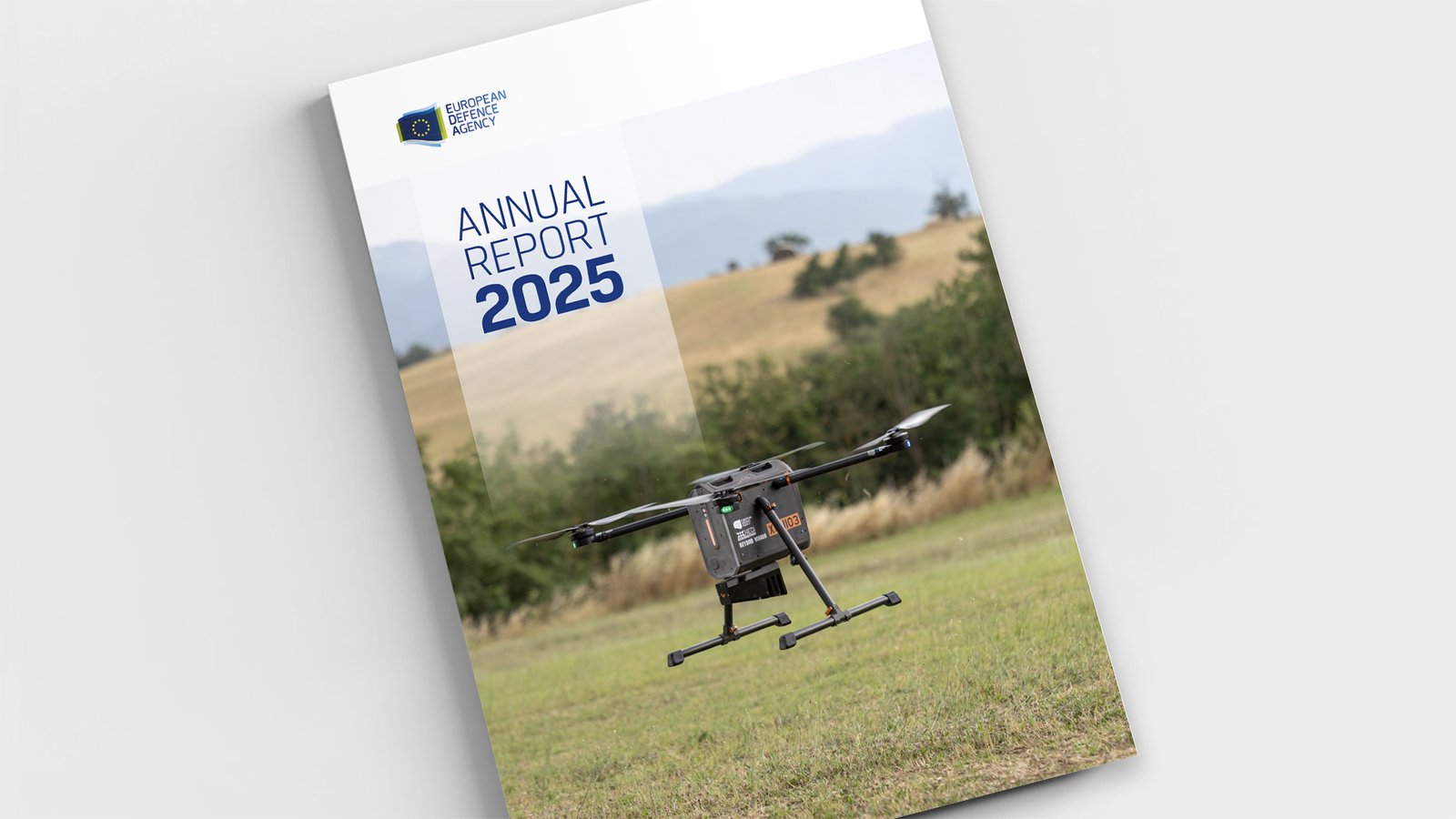
Brussels — Europe’s push to strengthen its defence capabilities gathered significant momentum in 2025, as European Union member states increased defence investment, expanded cooperation and accelerated efforts to develop new military technologies.
The European Defence Agency (EDA) Annual Report 2025, published on 15 April 2026, describes a year marked by a demanding security environment but also by growing European efforts to improve military readiness, develop joint capabilities and strengthen defence innovation.
The report shows that the EDA increasingly positioned itself as a platform for cooperation between EU member states, industry, research organisations and military users. Its activities ranged from capability development and joint procurement to research, autonomous systems, satellite communications and cooperation with NATO.
Defence Spending Moves Higher
One of the clearest indicators of Europe's changing defence posture was the continued rise in military expenditure.
According to EDA data included in the report, defence expenditure by the 27 EU member states reached €343 billion in 2024, representing a 19% increase compared with 2023 and equivalent to approximately 1.9% of EU GDP.
Defence investment exceeded €100 billion for the first time, accounting for 31% of total defence expenditure. The agency projected that defence spending would rise further in 2025 to approximately €381 billion, equivalent to 2.1% of GDP.
Defence investment was projected to approach €130 billion, while research and development expenditure was expected to reach approximately €17 billion in 2025. The figures underline the scale of Europe's effort to rebuild and modernise military capabilities after years of comparatively limited defence investment.
However, the EDA report also highlights an important challenge: increased national spending does not automatically translate into greater European military effectiveness. Greater cooperation, interoperability and coordinated investment remain necessary to reduce duplication and improve the ability of European armed forces to operate together.
Nearly €600 Million in New EDA Projects
The EDA reported substantial activity across collaborative defence programmes during 2025.
A total of 87 ad hoc capability and research and technology projects, worth approximately €558 million, were undertaken during the year. The agency also supported 10 Permanent Structured Cooperation (PESCO) projects and 42 European Defence Fund initiatives, together representing more than €300 million in additional activity.
The figures illustrate a broader shift toward practical cooperation, with European countries seeking to pool resources, coordinate requirements and develop capabilities collectively rather than relying exclusively on separate national programmes.
The agency also expanded a government-to-government matchmaking platform designed to connect countries with defence projects and capability requirements. By the end of the year, the platform contained more than 400 projects and 50 identified capability needs, providing governments with a mechanism to identify potential areas for cooperation.
Defence Innovation Moves Closer to the Battlefield
Technology and innovation were another major focus of the EDA's work in 2025.
The agency reported that 82 new research and technology projects were under negotiation at the end of the year, with a combined value of approximately €490 million. When combined with existing projects, the value of ongoing and planned EDA R&T activity reached around €788 million.
The EDA highlighted a persistent gap between Europe and the United States in defence research and development. RDT&E represents around 16% of the US defence budget, compared with approximately 4% within the EU, according to the report.
At the same time, European R&D spending is increasing, with the EDA expecting EU R&D expenditure to reach approximately €17 billion in 2025.
A central part of this effort is the Hub for EU Defence Innovation (HEDI), which seeks to move technologies more rapidly from research laboratories into operational military applications.
Autonomous Systems Tested in Italy
One of the most notable developments was the EDA's first full-scale operational experimentation campaign involving autonomous systems.
The campaign focused on cross-domain logistics, examining how autonomous technologies could support military logistics operations. Hosted by the Italian Army near Rome, the exercise involved 108 experts from 22 countries, including 20 EU member states as well as Switzerland and Ukraine.
The campaign concluded with a validation day in July 2025 and produced a procurement-oriented guide intended to help member states accelerate the acquisition of autonomous logistics systems.
The initiative reflects a broader effort to shorten the distance between technological experimentation and actual military procurement.
The EDA also continued research into artificial intelligence, including AI-based decision support for integrated air and missile defence.
Research Extends Across Air, Land, Maritime and Cyber Domains
The agency's 15 Capability Technology Groups, known as CapTechs, continued to bring together governments, defence companies, universities, research organisations, SMEs and startups.
Projects during 2025 covered areas including autonomous underwater vehicles, military communications, cyber resilience, artificial intelligence, air-to-air refuelling, sensors, electronic warfare, energy resilience and future land systems.
In the air domain, one project advanced toward autonomous air-to-air refuelling, while other initiatives focused on technologies for electric drones.
Maritime research included autonomous underwater systems and next-generation minesweeping technologies. In cyber, projects examined cyber-electromagnetic resilience and the protection of autonomous systems against interference.
The growing diversity of these programmes demonstrates how European defence cooperation is expanding beyond traditional weapons procurement toward a broader technological ecosystem.
Joint Procurement Gains Importance
The EDA also continued efforts to encourage countries to aggregate demand and jointly procure military equipment.
Among the areas receiving attention was loitering munitions. Following a letter of intent signed by 18 defence ministries, the agency conducted discussions during 2025 to develop a business case for joint procurement. The initiative was endorsed in September 2025.
The development reflects the growing importance of rapidly deployable and relatively low-cost technologies in modern warfare, particularly after the extensive use of drones and unmanned systems in recent conflicts.
The agency also continued work on additive manufacturing, with the objective of improving spare-parts availability and interoperability between European armed forces.
Satellite Communications Become a Strategic Capability
Satellite communications remained another important area of European defence cooperation.
The EDA reported growing demand for secure communications services supporting military missions and operations. Its CIS framework contract, covering deployable communications, cybersecurity and data-handling solutions, had reached €27 million in implemented demand since 2022.
The agency's GOVSATCOM-related activities also expanded during 2025, with six new service requests worth approximately €11 million.
The increasing emphasis on secure satellite communications reflects the growing importance of space-based infrastructure for military command, communications, intelligence and operations.
Strengthening the EU-NATO Relationship
The report also places considerable emphasis on cooperation between the European Union and NATO.
During 2025, EDA maintained regular exchanges with NATO on areas including military mobility, cyber defence, hybrid threats, air-to-air refuelling, military aviation, airworthiness and standardisation.
The objective is to ensure that European defence initiatives complement NATO capability planning rather than creating separate or competing structures.
For European governments, this coordination has become increasingly important as they seek to strengthen European defence capabilities while maintaining NATO as the central framework for collective defence.
A More Integrated European Defence Model
Taken together, the EDA's 2025 activities point toward a European defence model increasingly centred on cooperation.
The challenge is no longer simply to spend more on defence. European governments are also being pushed to determine where investment should be concentrated, how capabilities can be developed collectively, how defence industries can cooperate, and how new technologies can reach military users faster.
The EDA's activities in 2025 suggest that these priorities are beginning to translate into concrete programmes, from autonomous logistics and AI experimentation to joint procurement, satellite communications and multinational research.
With defence spending continuing to rise and European governments under pressure to strengthen military readiness, the next stage will be turning this increased financial commitment into deployable, interoperable and technologically advanced capabilities.
For the EDA, that means continuing to serve as a bridge between national defence ministries, European institutions, industry and research communities — while helping member states transform greater investment into tangible military capability.
Source: European Defence Agency, Annual Report 2025, published 15 April 2026.
Official report: European Defence Agency — Annual Report 2025