Japan and Nuclear Weapons: Between Extended Deterrence and Normative Dilemmas
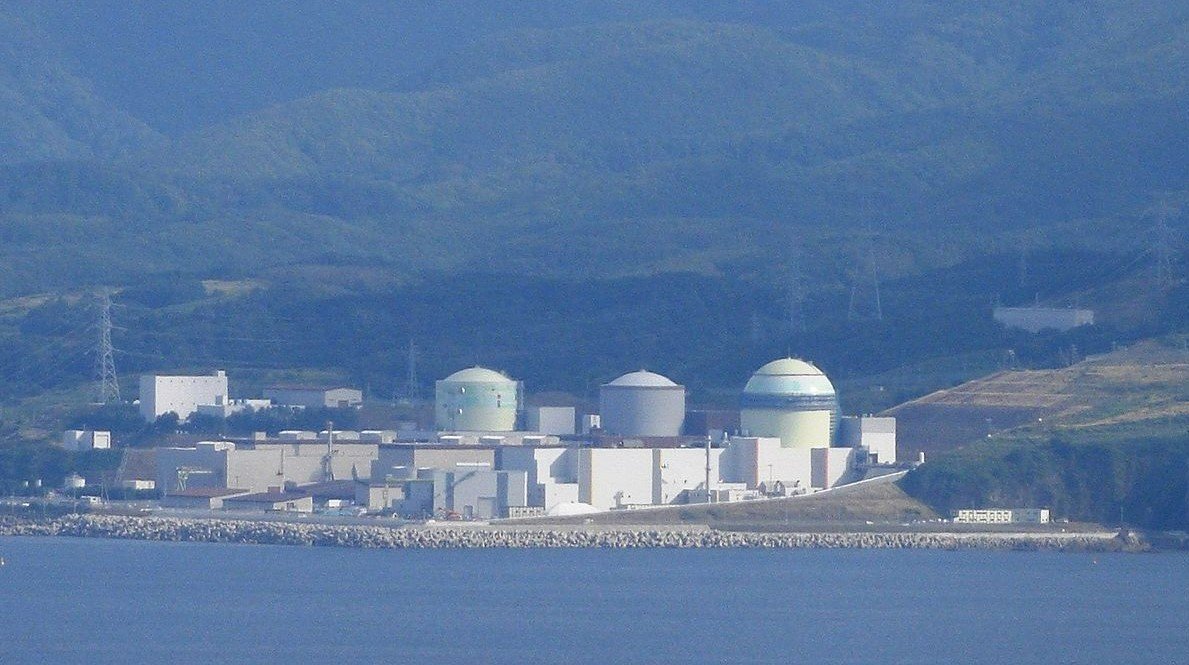
Tokyo — Japan continues to occupy a unique position in the global nuclear debate. As the only country to have experienced nuclear attacks during wartime, Japan has historically advocated nuclear disarmament and non-proliferation. At the same time, growing security concerns in East Asia have made the country's reliance on the United States' nuclear umbrella an increasingly important component of its national security strategy.
This creates a persistent strategic and normative dilemma: how can Japan pursue a world without nuclear weapons while simultaneously relying on nuclear deterrence for its own security?
A Nuclear Policy Built on Three Principles
Japan's official nuclear policy remains based on the Three Non-Nuclear Principles: not possessing, not producing and not permitting the introduction of nuclear weapons into Japan. The principles were first articulated by Prime Minister Eisaku Satō in 1967 and remain a central element of Japan's nuclear policy.
Japan is also a party to the Treaty on the Non-Proliferation of Nuclear Weapons (NPT) and continues to describe the treaty as the cornerstone of the international nuclear non-proliferation and disarmament system.
Tokyo's position is therefore distinct from that of nuclear-armed states. Japan does not seek to acquire its own nuclear arsenal, but it does rely on the security guarantees provided by the United States.
The American Nuclear Umbrella
The foundation of Japan's nuclear deterrence policy is the country's alliance with the United States.
Japanese authorities explicitly state that U.S. extended deterrence, including nuclear capabilities, is essential to protecting Japan in an increasingly challenging regional security environment. Japan's defence authorities argue that conventional military capabilities alone cannot necessarily deter an adversary threatening to use nuclear weapons.
The United States has repeatedly reaffirmed its commitment to defend Japan using the full range of its capabilities, including nuclear forces. This commitment forms a central element of the Japan-U.S. security relationship.
For Tokyo, the logic is straightforward: Japan can maintain its non-nuclear status while benefiting from the deterrent effect of America's nuclear capabilities.
But this arrangement also creates a fundamental tension between Japan's disarmament aspirations and the strategic role nuclear weapons continue to play in its security.
Extended Deterrence Becomes More Institutionalised
Japan and the United States have developed increasingly sophisticated mechanisms for discussing nuclear deterrence.
The Japan-U.S. Extended Deterrence Dialogue (EDD) was established in 2010 as a permanent forum for discussing how to maintain and strengthen extended deterrence. In 2024, the two countries also held their first ministerial-level meeting specifically focused on extended deterrence.
In December 2024, Tokyo and Washington established bilateral guidelines covering consultations and communication concerning extended deterrence, strategic messaging and measures designed to maximise deterrence.
The institutionalisation of these discussions demonstrates that extended nuclear deterrence is no longer treated simply as an abstract element of the alliance. It has become an increasingly important subject of strategic consultation between the two governments.
A More Difficult Regional Environment
Japan's reliance on extended deterrence has intensified as the strategic environment around the country has become more challenging.
North Korea's nuclear and missile programmes, China's expanding military capabilities and broader strategic competition in the Indo-Pacific have contributed to Japanese concerns about the credibility of existing deterrence arrangements.
Japan's defence authorities describe the country's security environment as the most severe and complex it has faced since the end of the Second World War. At the same time, Tokyo continues to maintain that it will not possess nuclear weapons itself.
This combination produces an unusual strategic formula: Japan strengthens its conventional defence capabilities while simultaneously seeking greater credibility in the U.S. nuclear guarantee.
The Hiroshima Legacy
Japan's position cannot be understood solely through the lens of military strategy.
The atomic bombings of Hiroshima and Nagasaki remain central to the country's political and diplomatic identity. Japan has repeatedly presented itself as a leading advocate of nuclear disarmament and has sought to preserve international awareness of the humanitarian consequences of nuclear weapons.
In 2025, marking 80 years since the atomic bombings, Tokyo continued to promote what it describes as a realistic and practical approach toward a world without nuclear weapons.
Japan's government argues that nuclear disarmament and deterrence are not necessarily incompatible. From Tokyo's perspective, maintaining credible deterrence is necessary under current security conditions, while reducing nuclear risks and ultimately achieving nuclear disarmament remain long-term objectives.
Japan's Diplomatic Balancing Act
This balancing act became particularly visible in Japan's approach to international nuclear diplomacy.
Tokyo has continued to support the NPT framework while advocating gradual and practical measures to reduce nuclear risks. In November 2025, Japan submitted a resolution to the UN General Assembly calling for a common roadmap toward a world without nuclear weapons. The resolution was adopted by the First Committee with the support of 145 countries and subsequently received 147 votes in the General Assembly.
Japan has also promoted its Hiroshima Action Plan, which includes measures such as maintaining the record of non-use of nuclear weapons, improving transparency, reducing nuclear stockpiles and strengthening non-proliferation.
The approach reflects Tokyo's attempt to position itself between two competing realities: the moral and historical imperative of nuclear disarmament and the strategic requirements of deterrence.
The Nuclear Dilemma
Japan's position highlights a broader dilemma faced by states living under nuclear umbrellas.
If Japan were to reject the nuclear component of U.S. extended deterrence, questions would arise over whether conventional capabilities alone could provide sufficient protection against nuclear-armed adversaries.
Yet continued reliance on the U.S. nuclear umbrella also means that Japan's security remains partly dependent on the existence and credibility of nuclear weapons — despite its long-standing commitment to their eventual elimination.
The contradiction is therefore structural rather than simply political.
Japan does not possess nuclear weapons, does not officially seek them and continues to advocate nuclear disarmament. At the same time, it considers U.S. nuclear deterrence an essential element of its national security.
Looking Ahead
The future of Japan's nuclear policy will likely depend heavily on developments in the Indo-Pacific and the credibility of the Japan-U.S. alliance.
For Tokyo, the central challenge is to maintain a credible deterrence posture without abandoning its identity as a major advocate of nuclear disarmament.
This balancing act is becoming increasingly difficult as nuclear capabilities expand in Japan's surrounding region and as strategic competition between major powers intensifies.
Japan's experience therefore illustrates one of the central contradictions of contemporary nuclear politics: a state can oppose nuclear weapons as a long-term objective while continuing to depend on them as a short-term security guarantee.
How Japan manages this tension will remain an important issue for Asian security, the future of the U.S. alliance system and the global debate over nuclear disarmament.